

The Digital Tree Monument at the Groene Hart Biennale
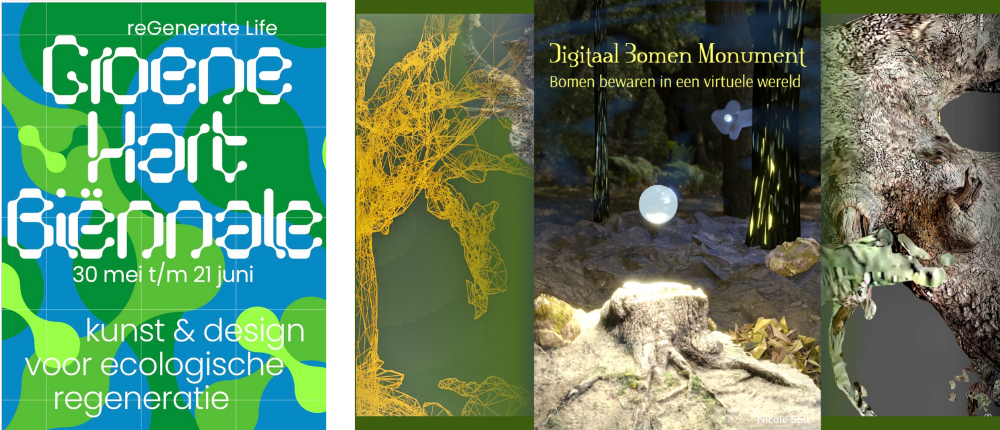
The Digital Tree Monument is one of the KIEM projects featured at the Groene Hart Biennale in Gouda! From May 30 to June 21, 2026, the inaugural edition of the Groene Hart Biennale will take place. This new art and design festival focuses on ecological regeneration within the Groene Hart region, exploring how art, design, and citizen initiatives can help restore and improve the local living environment for all life forms.
Speculative Design and Ecological Empathy
The Digital Tree Monument is an art project by Nicole Spit, in which characteristic trees are digitized and placed within a virtual dreamworld. While physical trees are disappearing due to salinization and soil subsidence, she offers a digital monument. However, by deliberately incorporating this “erosion” into the artwork, she reminds us that even a digital copy is no full replacement for living nature. It is a form of speculative design: Nicole designs for a future in which we might only have “eroded” digital remnants of our green heritage left.
Regenerative ecology begins with restoring the relationship between humans and nature. By inviting residents of Gouda to nominate a tree, the project compels them to stop viewing trees as mere “street furniture” and start seeing them as living beings with a history. This restoration of empathy is the first step toward regeneration: you only care for what you appreciate. Throughout her oeuvre, artist and speculative designer Nicole Spit constantly explores the boundaries between the natural and the artificial.
Tree Scanning Workshop: The Fragility of Archiving
On May 9, I hosted a 3D tree scanning workshop in Gouda for the Digital Tree Monument. Together, we captured characteristic trees in the city—not only through 3D scans, but also using heat-sensitive direct thermal prints and analog impressions in clay, which were later cast in plaster.
The project explores various methods of preservation and archiving, while simultaneously exposing the inherent vulnerability of these processes. During the capturing process, distortions and traces of transience inevitably emerge: digital data erosion, glitches in 3D scans, thermal prints that blacken when exposed to heat, clay that subtly deforms, and plaster that does not always fully cure. How can we preserve precious green heritage for the future when every single medium carries its own fragility?
A Network of Memories
Beyond the technical aspect, the project revolves around the stories connected to these trees. What kind of relationship do the residents of Gouda have with the older trees they pass every day—while walking the dog, looking out of their living room window, or arriving at the station?
Ultimately, the project questions how we can preserve not just the tree itself, but also the network of memories, experiences, and meanings surrounding it. What happens to an archive when the “captured” data itself slowly changes or degrades? And what kind of fragility ultimately lies hidden within our own history?
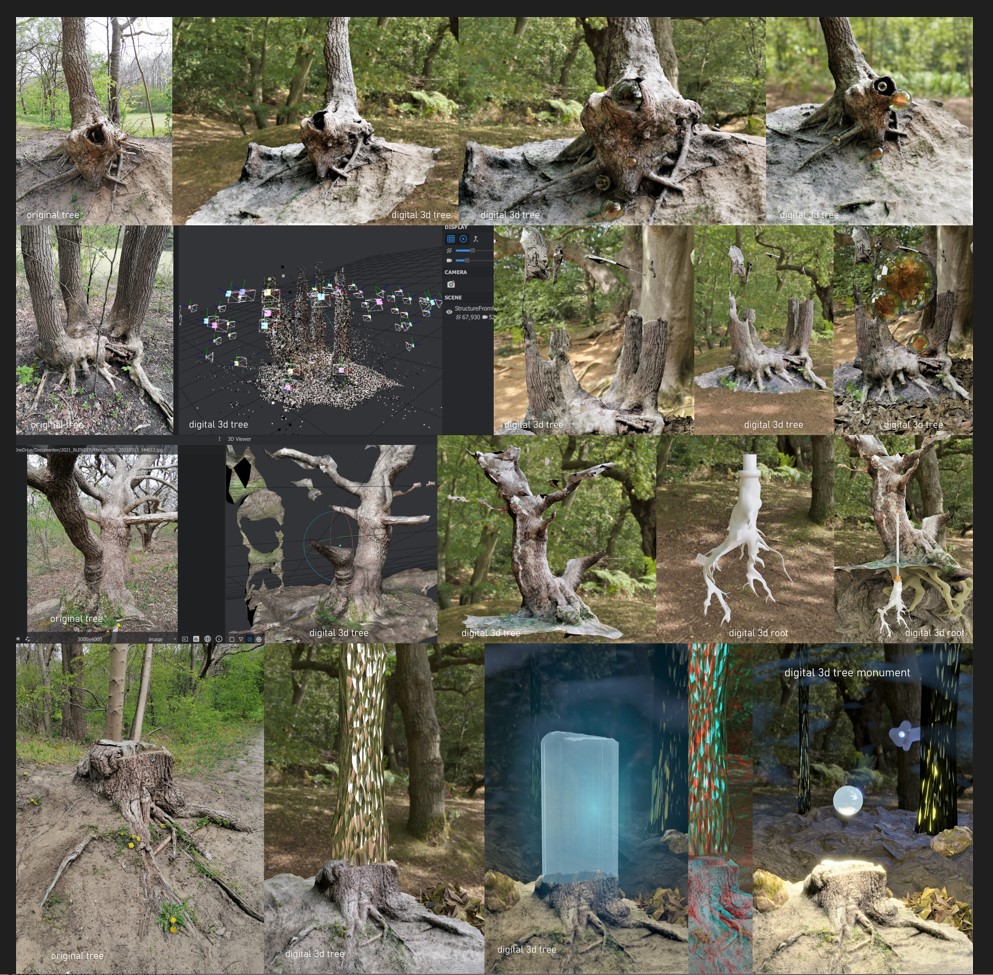
The Digital Tree Monument is an art project by Nicole Spit to digitize trees from the Castricum area and place them in a virtual dream world.This project took place in 2022-2023 and continues in other places.
In my artproject ‘Digital Tree Monument’ I selected eight trees in Castricum, which all represent a specific tree threat. Like nutrient-poor soil. urbanization, tree diseases, drought, salinazation. Some, like the old chestnut tree at Huize Koningsbosch or the old Willow at the ‘Tuin van Kapitein Rommel’ have already been felled and live on in the digital world.
We can restore stone monuments, but unfortunately not old monumental trees. How could we preserve them, with their specific phenotypic properties? Is a digital arboretum in a metaverse perhaps an alternative?
More info here on the website : Digitaal Bomen Monument